
 Ava Garrison
I still remember the first time I made Vegan Thai Red Curry Ramen on a rainy evening when I wanted something deeply comforting but still packed with bold flavor. The creamy coconut broth blended with spicy Thai red curry paste created the kind of warmth that instantly makes you slow down and savor every bite. Add springy ramen noodles, crisp vegetables, and golden tofu, and suddenly dinner feels both nourishing and exciting.
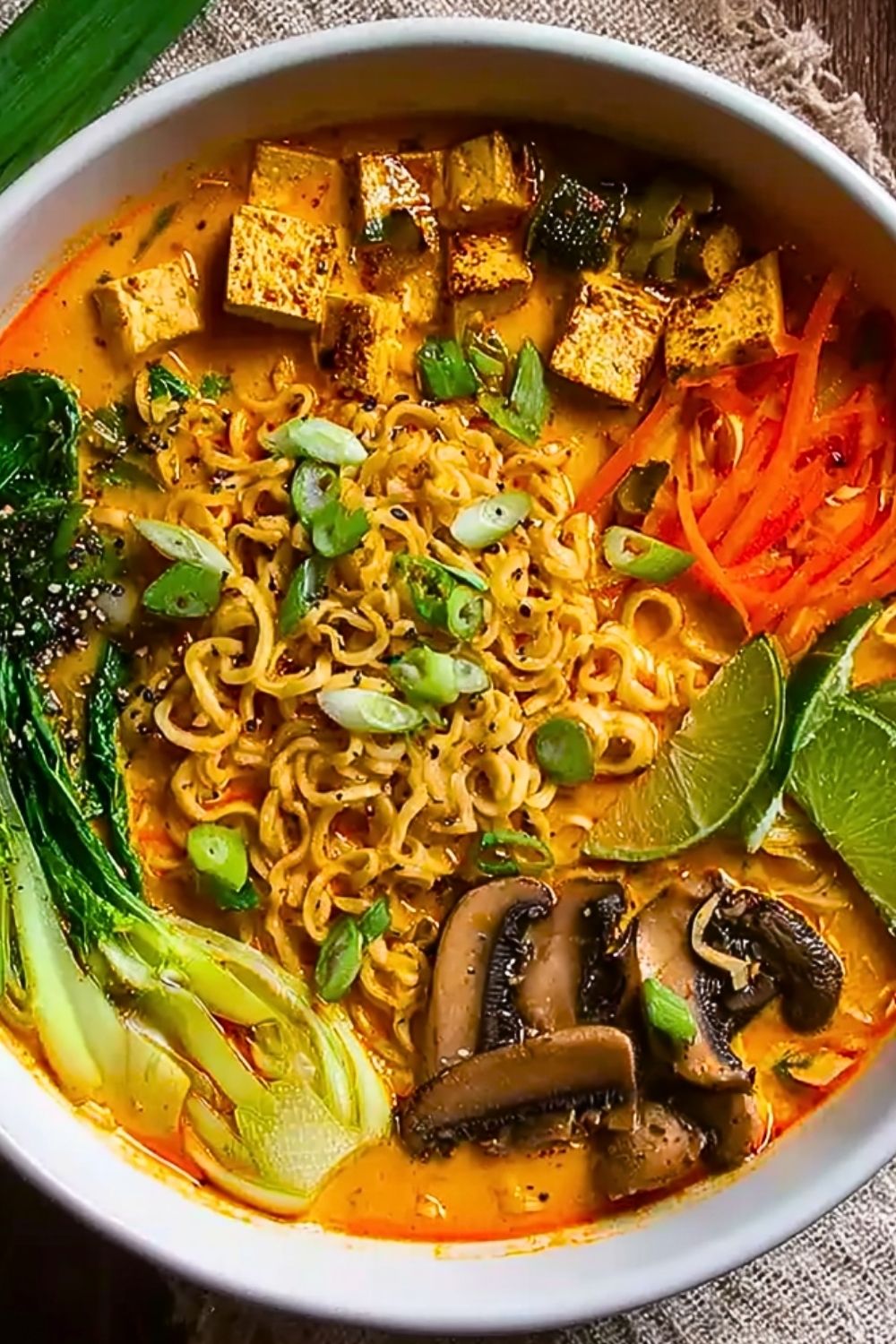
What I love most about this dish is how beautifully it balances richness, spice, freshness, and texture in a single bowl. The broth is silky and aromatic, the vegetables add vibrant color and crunch, and the noodles soak up every drop of flavor. It’s one of those meals I keep coming back to because it feels restaurant-worthy while still being easy enough to make at home.
Why You’ll Love This Vegan Thai Red Curry Ramen
This Vegan Thai Red Curry Ramen is the perfect combination of cozy comfort food and fresh, vibrant flavors. The creamy coconut milk softens the heat from the curry paste, creating a broth that feels luxurious without being too heavy.
It’s also incredibly versatile. You can load it up with your favorite vegetables, swap the noodles, or adjust the spice level depending on your mood. Whether you need a quick weeknight dinner or a satisfying meal to impress guests, this ramen fits the occasion perfectly.
Another reason this recipe stands out is how satisfying it is while still being completely plant-based. The tofu provides hearty texture and protein, while the vegetables and broth create a balanced meal that leaves you feeling full and energized.
What Kind of Noodles Should I Use for Vegan Thai Red Curry Ramen?
Traditional ramen noodles work beautifully in this recipe because they hold their texture well in the rich broth. Fresh ramen noodles give the dish a more authentic restaurant-style feel, while dried ramen noodles are convenient and easy to keep on hand.
Rice noodles can also be used if you prefer a gluten-free option or want a texture that feels lighter and more delicate. Udon noodles create a thicker, chewier bite that pairs wonderfully with the creamy curry broth.
Instant ramen noodles are another practical choice. Just discard the seasoning packets and use the noodles alone so the flavors of the homemade broth can truly shine.
Options for Substitutions
If you don’t have Thai red curry paste, yellow curry paste or even a mild green curry paste can work as alternatives. Each option changes the flavor slightly, but the broth will still be deliciously rich and aromatic.
Tofu can easily be swapped with tempeh or even chickpeas for a different source of plant-based protein. If you enjoy extra texture, crispy baked tofu adds a wonderful contrast to the silky noodles.
For the vegetables, bok choy, mushrooms, and bell peppers are excellent choices, but spinach, kale, snap peas, or shredded carrots can also be added depending on what you have available.
Coconut milk gives the broth its signature creamy texture, but if you prefer something lighter, you can use oat cream or a combination of vegetable broth and unsweetened plant milk.
If ramen noodles are unavailable, udon, soba, or rice noodles all make excellent substitutes while keeping the dish comforting and flavorful.
Ingredients for this Vegan Thai Red Curry Ramen
Ramen Noodles
Ramen noodles are the heart of this dish and give the bowl its comforting texture. They absorb the flavorful broth beautifully while still keeping a satisfying bite.
Thai Red Curry Paste
Thai red curry paste creates the bold foundation of the broth. It brings layers of spice, garlic, chili, and aromatic flavor that make the ramen taste rich and deeply savory.
Coconut Milk
Coconut milk adds creaminess and balances the heat from the curry paste. It gives the broth a silky texture that makes every spoonful smooth and comforting.
Vegetable Broth
Vegetable broth builds the liquid base of the soup and helps blend all the flavors together. A rich broth creates depth without overpowering the curry and coconut.
Tofu
Tofu adds plant-based protein and makes the ramen more filling. When lightly pan-fried or baked, it develops a golden exterior that contrasts perfectly with the creamy broth.
Bok Choy
Bok choy brings freshness and a slight crunch to the bowl. Its mild flavor works perfectly with the spicy broth and soft noodles.
Mushrooms
Mushrooms add earthy depth and a hearty texture that enhances the savory character of the ramen.
Red Bell Pepper
Red bell peppers contribute sweetness and color, helping balance the spice while adding a fresh crisp bite.
Garlic
Garlic intensifies the savory flavor of the broth and creates a fragrant base that pairs beautifully with curry paste.
Ginger
Fresh ginger adds warmth and brightness to the soup. It gives the broth a lively flavor that keeps the dish tasting fresh.
Soy Sauce
Soy sauce deepens the umami flavor and seasons the broth with a rich savory note.
Lime Juice
Lime juice brightens the entire dish and cuts through the richness of the coconut milk.
Green Onions
Green onions add freshness, color, and a mild sharpness that finishes the ramen beautifully.
Sesame Seeds
Sesame seeds provide a subtle nutty flavor and a light crunch for garnish.
Chili Oil or Chili Flakes
These add extra heat for anyone who enjoys a spicier ramen experience.
Fresh Cilantro
Fresh cilantro gives the dish a vibrant herbal finish that complements the Thai-inspired flavors.
Step 1: Prepare the Tofu
Start by pressing the tofu to remove excess moisture. This helps it become crispier when cooked and allows it to absorb more flavor.
Cut the tofu into cubes and season lightly with soy sauce, garlic powder, and black pepper. Heat a skillet with a small amount of oil and cook the tofu until all sides become golden brown and slightly crisp.
Set the tofu aside once cooked so it stays firm while the rest of the ramen comes together.
Step 2: Prepare the Vegetables
Wash and slice all the vegetables before starting the broth. Slice the mushrooms, cut the red bell pepper into thin strips, and separate the bok choy leaves.
Having everything prepared in advance makes the cooking process much smoother since the broth comes together quickly.
Fresh vegetables also help preserve texture and color, giving the ramen a vibrant presentation.
Step 3: Build the Flavor Base
Heat a large pot over medium heat and add a drizzle of oil. Add the minced garlic and grated ginger, stirring for about a minute until fragrant.
Next, stir in the Thai red curry paste. Cooking the curry paste briefly helps release its oils and intensifies the flavor.
This step is important because it creates the aromatic foundation that gives the broth its rich and layered taste.
Step 4: Create the Creamy Curry Broth
Pour the vegetable broth into the pot and stir well to combine it with the curry paste mixture.
Add the coconut milk and soy sauce, then allow the broth to simmer gently. As it cooks, the flavors blend together into a creamy, spicy, and savory soup.
Taste the broth and adjust the seasoning if needed. A little extra soy sauce can deepen the flavor, while a squeeze of lime juice brightens everything.
Step 5: Cook the Vegetables
Add the mushrooms and bell peppers to the simmering broth first since they need slightly more cooking time.
Cook until the mushrooms become tender and the peppers soften slightly while still keeping some bite.
Add the bok choy near the end so it stays vibrant green and lightly crisp.
Step 6: Cook the Ramen Noodles
Cook the ramen noodles separately according to the package instructions. Cooking them separately helps prevent the broth from becoming too starchy.
Drain the noodles once tender and rinse lightly if needed to stop the cooking process.
The noodles should remain springy and firm enough to hold up in the rich broth.
Step 7: Assemble the Bowls
Divide the cooked noodles among serving bowls and ladle the hot curry broth over the top.
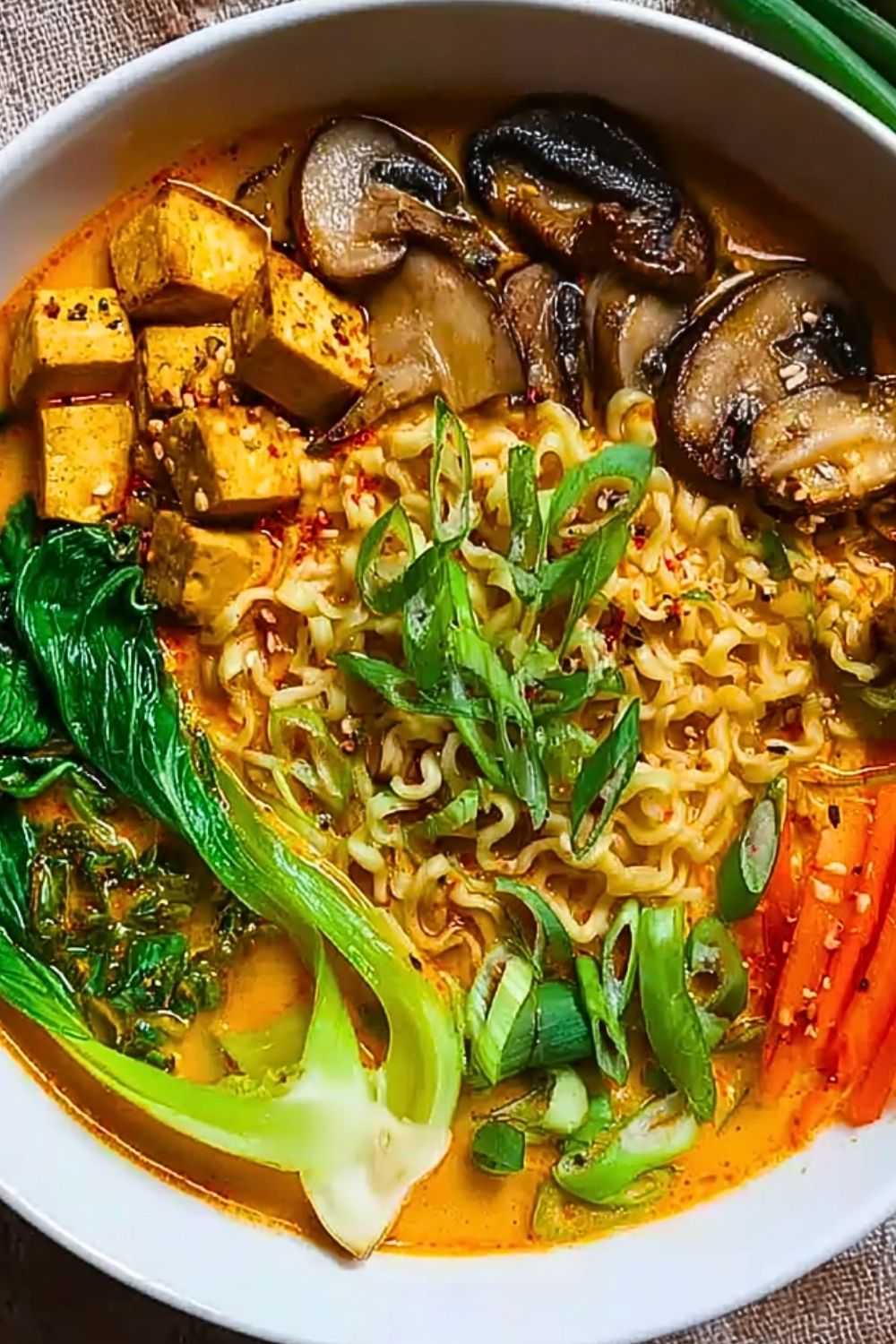
Arrange the tofu, mushrooms, bok choy, and bell peppers around the noodles for a colorful presentation.
This layered presentation makes the ramen look vibrant and restaurant-worthy.
Step 8: Add the Garnishes
Top the ramen with sliced green onions, sesame seeds, fresh cilantro, and a squeeze of lime.
For extra spice, drizzle chili oil or sprinkle chili flakes over the top.
These finishing touches add freshness, crunch, and brightness that complete the dish perfectly.
Step 9: Serve Immediately
Serve the Vegan Thai Red Curry Ramen while the broth is hot and the noodles are fresh.
The combination of creamy broth, chewy noodles, crisp vegetables, and golden tofu tastes best right after assembly.
Pair it with extra lime wedges or additional chili oil on the side so everyone can customize their bowl.
How Long to Prepare the Vegan Thai Red Curry Ramen
Making Vegan Thai Red Curry Ramen is surprisingly manageable, even on a busy day. Most of the preparation involves chopping vegetables, pressing tofu, and organizing ingredients before cooking begins. If your ingredients are prepped ahead of time, the entire cooking process feels smooth and efficient.
The broth itself comes together quickly because the flavors develop fast once the garlic, ginger, curry paste, and coconut milk are combined. While the broth simmers, the noodles and vegetables can be prepared at the same time, making this recipe ideal for weeknight dinners.
Preparation Time
The preparation stage usually takes about 15 to 20 minutes. This includes pressing and cubing the tofu, slicing vegetables, mincing garlic, grating ginger, and gathering garnishes.
If you use pre-cut vegetables or quick-cook ramen noodles, the prep time can become even shorter.
Cooking Time
The cooking process generally takes around 20 to 25 minutes. The tofu needs enough time to become golden and crisp, while the broth develops flavor as it simmers.
Vegetables cook quickly in the broth, and the noodles only require a few minutes depending on the variety used.
Total Time
From start to finish, Vegan Thai Red Curry Ramen can usually be ready in approximately 40 to 45 minutes.
Despite its rich flavor and impressive presentation, it’s a very approachable recipe that doesn’t require hours in the kitchen.
Tips for Perfect Vegan Thai Red Curry Ramen
Using full-fat coconut milk creates the richest and creamiest broth. Light coconut milk works if you prefer a lighter soup, but the texture will not be as luxurious.
Cook the curry paste briefly before adding liquids. This simple step releases deeper flavors and gives the broth a more authentic taste.
Always cook the noodles separately from the broth whenever possible. This keeps the soup from becoming cloudy or overly thick.
For crispier tofu, press out as much moisture as possible before cooking. A dry tofu surface browns much better and develops a firmer texture.
Fresh lime juice added right before serving makes a huge difference. The acidity balances the richness and brightens the overall flavor.
Layering toppings instead of mixing everything together helps preserve the texture of each ingredient and creates a visually appealing bowl.
If you enjoy extra spice, add chili oil gradually rather than directly into the pot so everyone can adjust heat levels individually.
Using fresh ginger and garlic instead of powdered versions gives the broth a cleaner and more vibrant flavor.
Watch Out for These Mistakes While Cooking
One common mistake is boiling the coconut milk too aggressively. High heat can cause the broth to separate and lose its silky texture. A gentle simmer works best.
Overcooking the noodles can make them soft and mushy very quickly. Since ramen noodles continue absorbing liquid after cooking, they should remain slightly firm before serving.
Adding all vegetables at the same time may result in uneven textures. Softer vegetables like bok choy should be added later than mushrooms or bell peppers.
Skipping the tofu pressing step often leaves the tofu watery and less flavorful. Removing excess moisture improves both texture and flavor absorption.
Using too much curry paste without balancing it with coconut milk or broth can overpower the dish. It’s easier to increase spice gradually than to fix an overly spicy soup.
Another mistake is under-seasoning the broth. Since noodles absorb flavor, the broth should taste slightly stronger before serving.
What to Serve With Vegan Thai Red Curry Ramen?
Fresh Spring Rolls
Fresh vegetable spring rolls pair beautifully with the rich ramen broth. Their crisp texture and fresh herbs create a refreshing contrast.
Asian Cucumber Salad
A cool cucumber salad with sesame oil and rice vinegar balances the warmth and spice of the ramen perfectly.
Crispy Vegetable Tempura
Light and crispy tempura vegetables add extra crunch and make the meal feel even more satisfying.
Steamed Edamame
Steamed edamame sprinkled with sea salt provides a simple and protein-rich side dish that complements the ramen well.
Mango Sticky Rice
For dessert, mango sticky rice offers a sweet and creamy finish that pairs wonderfully with Thai-inspired flavors.
Storage Instructions
Refrigerating Leftovers
Store leftover broth, noodles, and toppings separately whenever possible. This helps preserve the texture of the noodles and vegetables.
The broth can be stored in an airtight container in the refrigerator for up to 4 days.
Cooked tofu and vegetables also store well separately and can easily be reheated before serving.
Reheating Instructions
Reheat the broth gently over medium-low heat until warmed through. Avoid boiling the soup aggressively because coconut milk-based broths can separate.
The noodles can be reheated briefly in hot water or added directly into the warm broth for a minute.
Freezing Tips
The broth freezes much better than the noodles. If planning to freeze the recipe, freeze only the broth and vegetables in a freezer-safe container.
When ready to serve, prepare fresh noodles and toppings for the best texture.
Best Freshness Tips
Fresh garnishes such as cilantro, green onions, sesame seeds, and lime wedges should always be added right before serving.
These toppings lose their freshness if stored directly in the soup.
Estimated Nutrition
Calories
Approximately 450 to 550 calories per serving depending on noodle type and toppings.
Protein
Around 16 to 22 grams of protein from tofu and noodles.
Carbohydrates
Approximately 45 to 60 grams of carbohydrates mainly from ramen noodles and vegetables.
Fat
Roughly 18 to 28 grams of fat, largely coming from coconut milk.
Fiber
About 6 to 10 grams of fiber from vegetables, herbs, and tofu.
Sodium
Sodium levels vary depending on broth and soy sauce used, averaging around 700 to 1000 milligrams per serving.
Frequently Asked Questions
Can I make Vegan Thai Red Curry Ramen gluten-free?
Yes, simply use gluten-free noodles and substitute regular soy sauce with tamari or coconut aminos.
Is this ramen very spicy?
The spice level depends on the curry paste used. Coconut milk helps mellow the heat, and the spice can easily be adjusted.
Can I prepare the broth ahead of time?
Absolutely. The broth often tastes even better the next day because the flavors continue developing as it rests.
What other proteins can I use instead of tofu?
Tempeh, edamame, chickpeas, or vegan chicken alternatives all work well in this recipe.
Can I use different vegetables?
Yes, this recipe is highly flexible. Spinach, kale, carrots, snap peas, baby corn, and broccoli all taste excellent in the broth.
Conclusion
Vegan Thai Red Curry Ramen is the kind of meal that transforms simple ingredients into something deeply comforting and exciting. The creamy coconut broth, spicy curry flavors, tender noodles, and colorful vegetables create a bowl that feels both nourishing and indulgent.
One of the best things about this recipe is its flexibility. You can customize the spice level, switch up the vegetables, or experiment with different noodles while still achieving a flavorful and satisfying result.
Whether you’re making it for a cozy dinner at home, serving guests, or meal-prepping for the week, this ramen delivers warmth, flavor, and texture in every bite. Once you make it, it quickly becomes one of those recipes you crave again and again.
Vegan Thai Red Curry Ramen
- Prep Time: 20 minutes
- Cook Time: 25 minutes
- Total Time: 45 minutes
- Yield: 4 servings
- Category: Dinner
- Method: Stovetop
- Cuisine: Thai-Inspired Vegan
- Diet: Vegan
Description
This Vegan Thai Red Curry Ramen is rich, creamy, spicy, and packed with comforting flavor in every bite. The silky coconut curry broth pairs perfectly with tender ramen noodles, crispy tofu, mushrooms, bok choy, and fresh vegetables for an easy dinner that feels restaurant-quality at home. Whether you need quick dinner ideas, healthy comfort food, easy vegan recipes, or cozy food ideas for busy nights, this flavorful ramen bowl delivers the perfect balance of heat, creaminess, and freshness.
Ingredients
14 oz extra firm tofu, cubed
2 packs ramen noodles
1 tbsp vegetable oil
3 tbsp Thai red curry paste
4 cups vegetable broth
1 can full-fat coconut milk
3 cloves garlic, minced
1 tbsp fresh ginger, grated
1 tbsp soy sauce
1 tsp sesame oil
1 cup mushrooms, sliced
1 red bell pepper, thinly sliced
2 baby bok choy, halved
2 green onions, sliced
1 tbsp lime juice
1 tsp sesame seeds
1 tbsp fresh cilantro, chopped
1 tsp chili oil
Instructions
1. Press the tofu for at least 15 minutes to remove excess moisture, then cut into cubes.
2. Heat vegetable oil in a skillet over medium heat and cook the tofu until golden and crispy on all sides. Set aside.
3. In a large pot, sauté the garlic and ginger until fragrant.
4. Stir in the Thai red curry paste and cook for about 1 minute to deepen the flavor.
5. Pour in the vegetable broth and coconut milk, stirring until smooth and combined.
6. Add soy sauce and sesame oil, then bring the broth to a gentle simmer.
7. Add mushrooms and red bell pepper to the broth and cook until slightly tender.
8. Add bok choy during the final few minutes of cooking to keep it vibrant and crisp.
9. Cook the ramen noodles separately according to package instructions and drain well.
10. Divide the noodles into serving bowls and pour the hot curry broth over the top.
11. Arrange crispy tofu and vegetables over the noodles.
12. Garnish with green onions, sesame seeds, cilantro, lime juice, and chili oil before serving.
Notes
Pressing the tofu thoroughly helps it become crispier and prevents it from becoming soggy in the broth.
Cook the ramen noodles separately to keep the broth silky and prevent the noodles from absorbing too much liquid.
Add lime juice right before serving for the freshest and brightest flavor.
Nutrition
- Serving Size: 1 bowl
- Calories: 520
- Sugar: 8g
- Sodium: 920mg
- Fat: 24g
- Saturated Fat: 15g
- Unsaturated Fat: 7g
- Trans Fat: 0g
- Carbohydrates: 55g
- Fiber: 8g
- Protein: 19g
- Cholesterol: 0mg
Keywords: vegan ramen, Thai curry ramen, easy dinner, vegan dinner ideas, healthy comfort food, noodle soup, plant based ramen, coconut curry noodles